Wet Pour vs Rubber Tiles: Which Is Better for Your Home Gym?
Choosing the right flooring can make or break a home gym. It affects comfort, noise, durability, safety and even how motivated you feel to train. Two popular options are wet pour rubber and rubber tiles. Both offer cushioning and grip, but they perform quite differently once installed in a Melbourne home, garage or outdoor training area.
If you are weighing up wet pour vs rubber tiles for your home gym, the short answer is this: rubber tiles are usually the better choice for most homeowners. They are easier to install, simpler to replace and more practical for garages and multipurpose spaces. Wet pour can still be an excellent solution if you want a seamless, permanent finish and have a dedicated gym area.
What Is Wet Pour Rubber?
Wet pour is a poured-in-place rubber surface made by mixing rubber granules with a polyurethane binder and trowelling it onto the prepared base. Once cured, it forms a seamless surface with no joins between sections.
It is commonly used in playgrounds, pathways and commercial recreation areas. In Australia, wet pour playground systems are often discussed alongside AS 4422, which covers impact attenuation for playground surfacing. While that standard is important for play areas, it is not a direct performance standard for home gyms. For gym flooring, factors like density, thickness, slip resistance, acoustic performance and load-bearing matter more.
What Are Rubber Tiles?
Rubber tiles are pre-manufactured flooring tiles made from recycled rubber, virgin rubber or a blend of both. They are available in different thicknesses, sizes and finishes, and can be loose laid, glued down or installed with interlocking edges depending on the product.
For home gyms, rubber tiles are a popular choice because they are modular and adaptable. You can cover a small weights corner, a full garage gym or even a spare room without committing to a fully permanent surface.
Wet Pour vs Rubber Tiles: Key Differences
1. Installation
Rubber tiles win for convenience. Tiles are much faster to install and usually involve less disruption. In many home gyms, especially garages, they can go straight over a suitably level concrete slab.
Wet pour requires more preparation, controlled installation conditions and curing time. The base must be properly prepared and moisture issues need to be addressed first. In Melbourne, where weather can swing from damp mornings to hot afternoons, installation timing matters. Excess moisture or poor curing conditions can affect the final finish.
2. Durability Under Weights
Both products are durable, but they behave differently under heavy gym use. Dense rubber tiles are typically better for free weights, racks and dropped dumbbells because they come in thicker formats designed for concentrated loads.
Wet pour offers cushioning and a clean look, but for home gyms with barbells or heavy equipment, it may not be as practical unless the system is specifically engineered for that use. A surface that looks great in a functional fitness room may not be ideal under repeated impact from weight training.
3. Repairs and Maintenance
This is one of the biggest differences. If a tile is damaged, stained or worn, you can usually replace just that section. That keeps maintenance simple and cost-effective.
With wet pour, repairs are more involved. Patch repairs can be visible, especially if the original colour has faded over time. If part of the surface lifts or wears unevenly, fixing it often requires a specialist and may mean reworking a larger area.
4. Moisture and Melbourne Conditions
Melbourne garages and ground-floor spaces often deal with seasonal moisture, temperature changes and condensation. That matters when choosing home gym flooring.
Rubber tiles are generally more forgiving in these environments because they can be lifted if the slab needs inspection or drying. Wet pour is more permanent, so any underlying moisture issue should be resolved before installation. If your gym is in a garage, a moisture assessment and proper subfloor preparation are essential either way.
5. Look and Finish
Wet pour delivers a sleek, seamless appearance. It is ideal if you want a custom shape, curved edges or a premium built-in finish. It can look particularly smart in a dedicated studio gym or indoor wellness space.
Rubber tiles have visible joins, but modern products still look sharp and professional. Many homeowners prefer the modular look because it suits functional training spaces and can be expanded later.
6. Cost
In most residential projects, rubber tiles are more budget-friendly. Installation is usually simpler, labour costs are lower and future repairs are easier to manage.
Wet pour can be more expensive upfront because of the installation method, base preparation and labour involved. It can be worth it for a high-end, permanent fit-out, but it is not always the most economical option for a home gym.
Which Option Is Better for Your Home Gym?
Choose rubber tiles if you want:
- A practical solution for a garage or spare room gym
- Easy installation with minimal downtime
- Strong performance under weights and equipment
- The ability to replace individual sections later
- A cost-effective option that can move with you if needed
Choose wet pour if you want:
- A seamless, custom-finished surface
- A permanent installation in a dedicated gym area
- Smooth coverage around unusual room shapes or built-in features
- A premium aesthetic over modular flexibility
Practical Tips Before You Buy
- Match thickness to use: Around 8-10 mm can suit cardio and light training, while 15-20 mm or more is often better for weights zones.
- Check the subfloor: Uneven, cracked or damp concrete should be addressed before installation.
- Think about noise: If your gym is above living areas or near neighbours, denser rubber helps reduce impact noise and vibration.
- Plan for cleaning: Smooth, sealed surfaces are easier to mop, while textured surfaces may trap more dust from training gear.
- Buy for real use, not just appearance: A beautiful finish matters, but durability and performance matter more in a gym.
Final Verdict
For most Melbourne homeowners, rubber tiles are the better all-round choice for a home gym. They are versatile, durable, easier to install and more forgiving in garages or spaces affected by changing weather conditions. They also make future upgrades and repairs far simpler.
Wet pour still has a place, especially in premium, purpose-built fitness rooms where a seamless finish is the priority. But if you want the best balance of performance, practicality and value, rubber tiles will suit most home gyms better.
If you are unsure which option fits your space, start with how you train, where the gym is located and whether you need a permanent or flexible flooring solution. That will usually point you to the right choice.
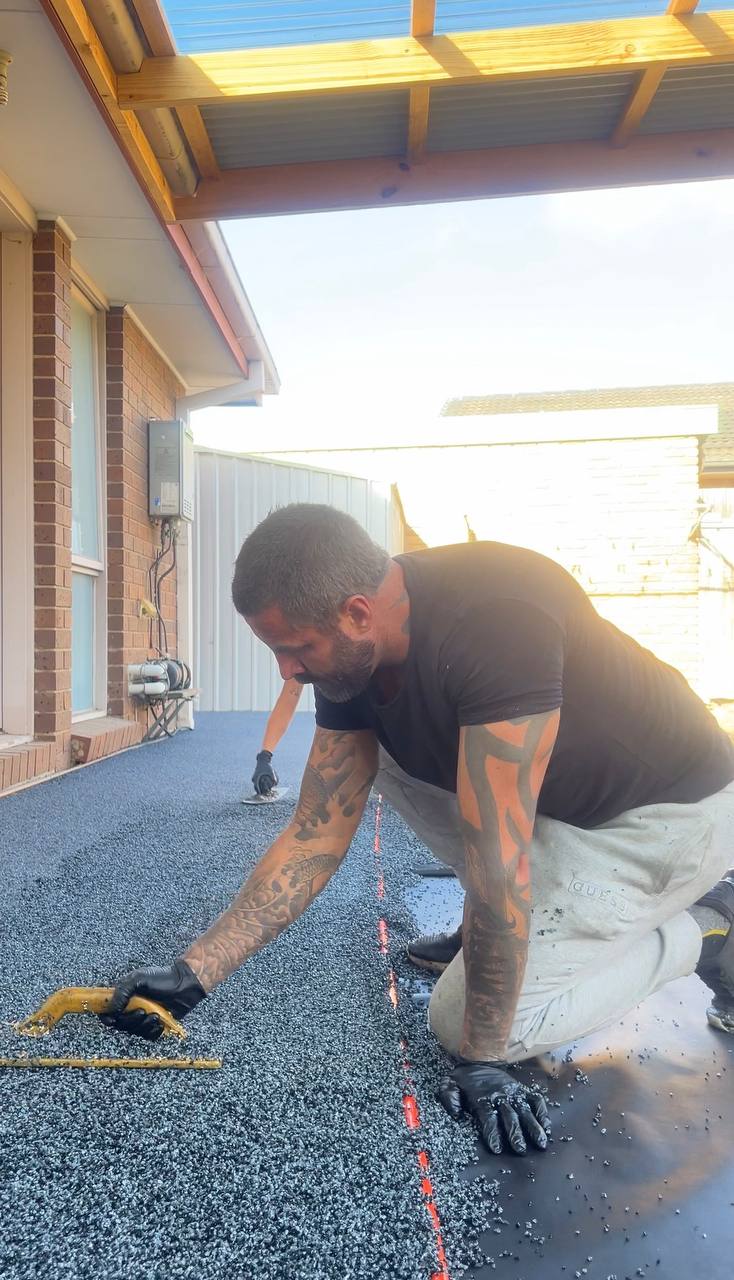
Written by Mitchell, Founder of Rubber Floor Solutions
Mitchell has 10+ years hands-on experience installing wetpour rubber flooring across Victoria. Installations for playgrounds, gyms, pools and equine facilities, with playground depth matched to fall height. Based in Melbourne, servicing all of Victoria.