Wet Pour vs. Rubber Tiles: Which is Better for Your Melbourne Home Gym?
So, you've decided to transform a corner of your Melbourne home into a dedicated gym – fantastic! Now comes a crucial decision: what kind of flooring will support your fitness journey? The two most popular options for home gyms are wet pour rubber and rubber tiles. Both offer excellent benefits, but understanding their differences is key to making the right choice for your space, budget, and workout style.
At Rubber Floor Solutions, we know Melbourne's unique climate and lifestyle, and we're here to help you navigate the options. Let's dive in!
Understanding Wet Pour Rubber Flooring
Wet pour rubber, also known as 'in-situ' rubber, is a seamless flooring system created by mixing rubber granules with a binding agent on-site and then pouring and trowelling it into place. It's the same durable, impact-absorbing surface you often see in playgrounds, adhering to strict Australian standards like AS 4422 for critical fall height protection.
Pros of Wet Pour Rubber for Home Gyms:
- Seamless Finish: The biggest advantage is its smooth, continuous surface. This eliminates trip hazards and prevents dust or debris from accumulating in seams, making cleaning a breeze.
- Customisation: Wet pour offers unparalleled design flexibility. You can choose from a vast array of colours, create custom patterns, or even embed your personal training logo.
- Superior Impact Absorption: Ideal for heavy lifting (think deadlifts and Olympic lifts), its seamless nature provides consistent cushioning across the entire area, protecting both your subfloor and your joints.
- Durability: Once cured, wet pour is incredibly resilient and can withstand heavy use, making it a long-term investment.
- Excellent Acoustic Properties: Helps to dampen sound, a bonus if your home gym is near living areas or bedrooms.
Cons of Wet Pour Rubber for Home Gyms:
- Professional Installation Required: Wet pour is a specialist job. It requires skilled installers, which adds to the initial cost.
- Curing Time: Once installed, it requires a curing period (typically 24-72 hours) before it can be used, meaning your gym will be out of action temporarily.
- Higher Initial Cost: Generally more expensive upfront than rubber tiles due to the labour and specialised materials involved.
- Permanent: While durable, it's a permanent fixture. Removing or changing it down the line is a significant undertaking.
Exploring Rubber Tiles for Home Gyms
Rubber tiles are pre-manufactured, interlocking or glue-down sections of rubber flooring. They come in various thicknesses, densities, and colours, offering a versatile and often DIY-friendly solution.
Pros of Rubber Tiles for Home Gyms:
- DIY Friendly: Many rubber tiles are designed for easy, interlocking installation, making them a popular choice for homeowners looking to save on labour costs.
- Lower Initial Cost: Generally more budget-friendly than wet pour, especially if you opt for self-installation.
- Portability & Flexibility: Tiles can be easily removed, rearranged, or replaced if damaged. This is great if you're renting or think you might relocate your gym in the future.
- Quick Installation: You can often lay down rubber tiles in a single afternoon and use your gym almost immediately.
- Targeted Repair: If a tile is damaged, you only need to replace that specific tile, not the entire floor section.
Cons of Rubber Tiles for Home Gyms:
- Seams: The presence of seams can be a drawback. They can collect dirt, potentially lead to trip hazards if not laid perfectly, and may show wear over time.
- Less Design Customisation: While colours are available, the design options are more limited compared to the seamless artistry of wet pour.
- Potential for Movement: Depending on the type and installation, tiles can sometimes shift or curl at the edges, especially with heavy use or temperature fluctuations.
- Acoustic Performance: While good, it may not match the superior sound dampening of a fully bonded, seamless wet pour system.
Melbourne Weather & Your Home Gym Floor
Melbourne's climate, with its 'four seasons in one day', is worth considering. Both wet pour and rubber tiles are robust and handle temperature fluctuations well. However, if your home gym is in an uninsulated garage or an area exposed to significant temperature swings, ensure your chosen rubber tiles are high-quality and designed to minimise expansion and contraction. Wet pour, being a bonded system, is generally more stable in such environments.
Which is Right for Your Home Gym?
To help you decide, ask yourself these questions:
- What's your budget? If budget is a primary concern and you're happy to DIY, rubber tiles might be your best bet.
- How do you train? For serious powerlifting or Olympic lifting with heavy drops, the seamless consistency and superior impact absorption of wet pour are highly recommended. For general fitness, cardio, or lighter weights, tiles are perfectly adequate.
- How important is aesthetics? If you envision a sleek, professional-looking gym with custom branding, wet pour delivers. If functionality trumps aesthetics, tiles are a great choice.
- Do you need flexibility? If you might move your gym or home in the future, the portability of tiles is a huge advantage.
Practical Tips from Rubber Floor Solutions:
- Subfloor Preparation: Regardless of your choice, a clean, dry, and level subfloor is crucial for optimal performance and longevity.
- Thickness Matters: For home gyms, we generally recommend a minimum of 8mm thickness for good impact absorption, with 10mm-15mm being ideal for areas with heavy weights.
- Ventilation: Ensure good ventilation during and after installation, especially for wet pour, to aid in curing and dissipate any initial rubber odour.
- Maintenance: Both types of flooring are low maintenance. Regular sweeping and occasional damp mopping with a mild, pH-neutral cleaner are usually sufficient.
Choosing between wet pour and rubber tiles for your Melbourne home gym ultimately comes down to your personal preferences, budget, and fitness goals. At Rubber Floor Solutions, we supply and install both options, ensuring you get a high-quality, durable, and safe surface for your workouts. Contact us today for a consultation and a free quote – let's build your dream home gym floor!
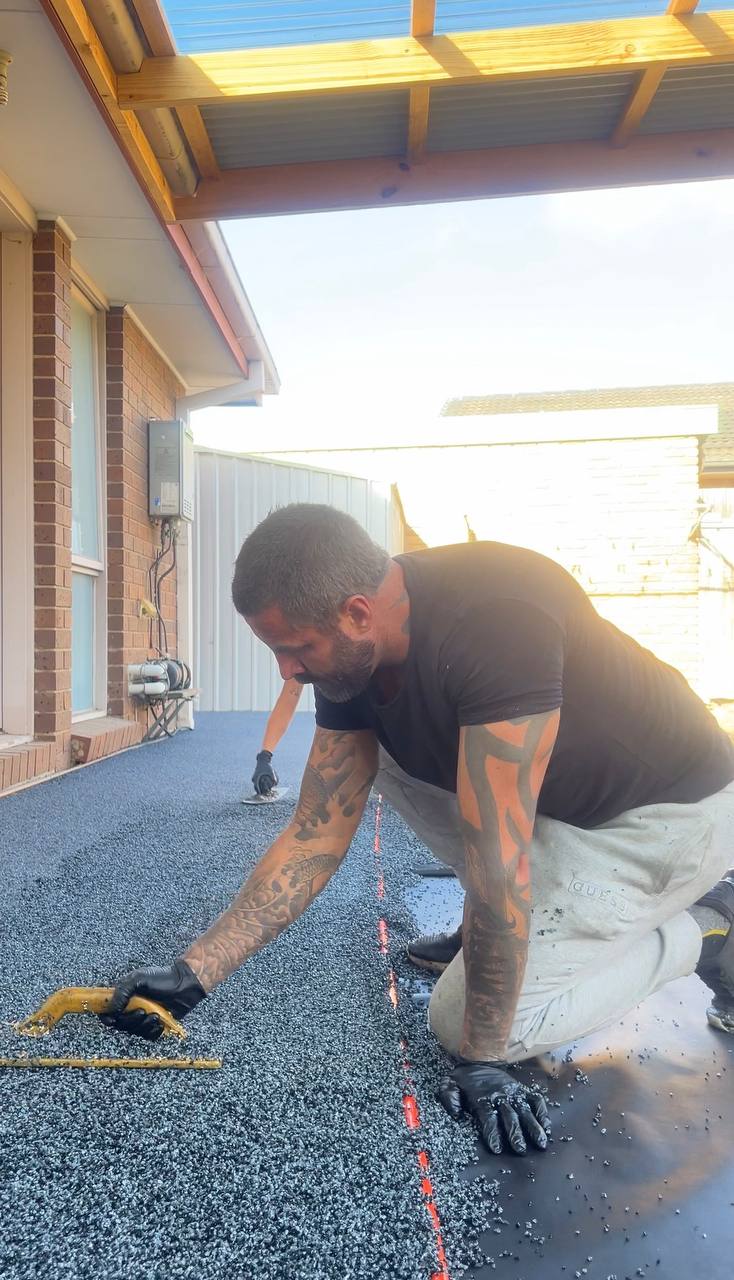
Written by Mitchell, Founder of Rubber Floor Solutions
Mitchell has 10+ years hands-on experience installing wetpour rubber flooring across Victoria. Installations for playgrounds, gyms, pools and equine facilities, with playground depth matched to fall height. Based in Melbourne, servicing all of Victoria.