Wet Pour vs. Rubber Tiles: The Ultimate Home Gym Flooring Showdown
So, you've decided to level up your fitness game and create a dedicated home gym in your Melbourne abode – excellent choice! Now comes the critical decision: what flooring will best support your workouts, protect your subfloor, and keep you safe? When it comes to rubber flooring, the two main contenders are wet pour rubber and rubber tiles. Each offers unique benefits and drawbacks, and understanding them is key to making the right investment for your fitness sanctuary.
Understanding the Contenders: Wet Pour Rubber
Wet pour rubber, also known as 'in-situ' rubber, is a seamless flooring system created by mixing rubber granules with a binding agent on-site and then pouring and trowelling it into place. This method results in a smooth, continuous surface free of seams and joints. While commonly associated with playgrounds (and adhering to stringent standards like AS 4422 for critical fall height), it's gaining popularity for home gyms due to its customisability and impact absorption properties.
Pros of Wet Pour Rubber for Home Gyms:
- Seamless Finish: No gaps or trip hazards, providing a clean and professional look. This is particularly appealing for larger home gym spaces.
- Superior Impact Absorption: Can be installed at varying thicknesses, offering excellent shock absorption for heavy lifting, plyometrics, and high-impact activities. This helps protect both your joints and your subfloor from dropped weights.
- Customisable Colours & Designs: A wide range of colours and even multi-colour designs can be incorporated, allowing you to perfectly match your home gym's aesthetic.
- Durability: Once cured, it forms a highly durable and resilient surface that can withstand significant wear and tear.
- Easy to Clean: The seamless surface makes cleaning and maintenance straightforward.
Cons of Wet Pour Rubber for Home Gyms:
- Professional Installation Required: This isn't a DIY job. Wet pour requires specialist installers, which adds to the overall cost.
- Curing Time: There's a drying and curing period before the floor can be used, which can delay your gym's opening.
- Higher Upfront Cost: Generally more expensive per square metre than rubber tiles due to the specialised materials and labour involved.
- Permanent: Once installed, it's a relatively permanent fixture and difficult to remove or alter without significant effort.
Understanding the Contenders: Rubber Tiles
Rubber tiles are pre-manufactured squares or interlocking pieces of rubber flooring. They come in various thicknesses, densities, and colours and are a popular choice for both commercial and home gyms due to their versatility and ease of installation. Many are made from recycled rubber, making them an environmentally friendly option.
Pros of Rubber Tiles for Home Gyms:
- DIY-Friendly Installation: Many rubber tiles, especially interlocking ones, can be installed by a competent DIY enthusiast, saving on labour costs.
- Cost-Effective: Generally more affordable per square metre than wet pour rubber, making them a budget-friendly option.
- Portability & Flexibility: Easy to remove, replace, or reconfigure if you move house or want to change your gym layout. Damaged tiles can be individually replaced.
- Good Impact Absorption: While not always as thick as wet pour, thicker rubber tiles still offer excellent protection for your subfloor and joints during workouts.
- Variety: Available in a vast array of colours, textures, and thicknesses to suit different needs and aesthetics.
Cons of Rubber Tiles for Home Gyms:
- Seams: Even with interlocking tiles, seams are present. These can sometimes accumulate dirt or become trip hazards if not properly installed or if the tiles shift over time.
- Less Seamless Look: The tiled appearance may not offer the same sleek, professional aesthetic as a seamless wet pour floor.
- Potential for Movement: Non-interlocking tiles might shift during intense workouts if not properly adhered or if heavy equipment is dragged across them.
- Water Penetration: Spills can seep through seams to the subfloor if not cleaned up promptly.
Melbourne's Climate & Your Choice
Melbourne's often unpredictable weather, with its hot summers and cool, damp winters, is worth considering. Both wet pour and rubber tiles are highly durable and resilient to temperature fluctuations. However, ensure your chosen product is suitable for your specific environment, especially if your home gym is in a garage or an area prone to significant temperature swings.
Which is Better for Your Home Gym? Practical Tips & Actionable Advice
The 'better' choice ultimately depends on your specific needs, budget, and priorities. Here's a breakdown to help you decide:
- For the Serious Lifter & High-Impact Training: If you're regularly dropping heavy weights, performing plyometrics, or engaging in high-impact activities, the superior impact absorption and seamless nature of wet pour rubber might be worth the extra investment. Consider a thickness of at least 15mm-20mm.
- For the Budget-Conscious & DIY Enthusiast: If you're looking for a cost-effective solution you can install yourself, rubber tiles are an excellent choice. Opt for thicker tiles (10mm-15mm) for better protection, especially in areas where weights will be dropped.
- For Flexibility & Future Changes: If you envision moving your gym or changing its layout, the modular nature of rubber tiles offers unparalleled flexibility.
- For a Premium, Customised Look: If aesthetics and a completely integrated, professional finish are paramount, wet pour rubber allows for extensive customisation to create a truly unique space.
- Consider Your Subfloor: Both options require a clean, level, and dry subfloor. Wet pour requires a professionally prepared base.
- Ventilation: Like any new rubber product, there might be an initial rubber smell. Ensure good ventilation in your gym space, especially in the first few weeks.
At Rubber Floor Solutions, we understand the nuances of rubber flooring. Whether you're leaning towards the seamless elegance of wet pour or the practical versatility of rubber tiles, our Melbourne-based team can provide expert advice and high-quality installation to ensure your home gym is safe, functional, and ready for all your fitness goals. Contact us today for a personalised consultation!
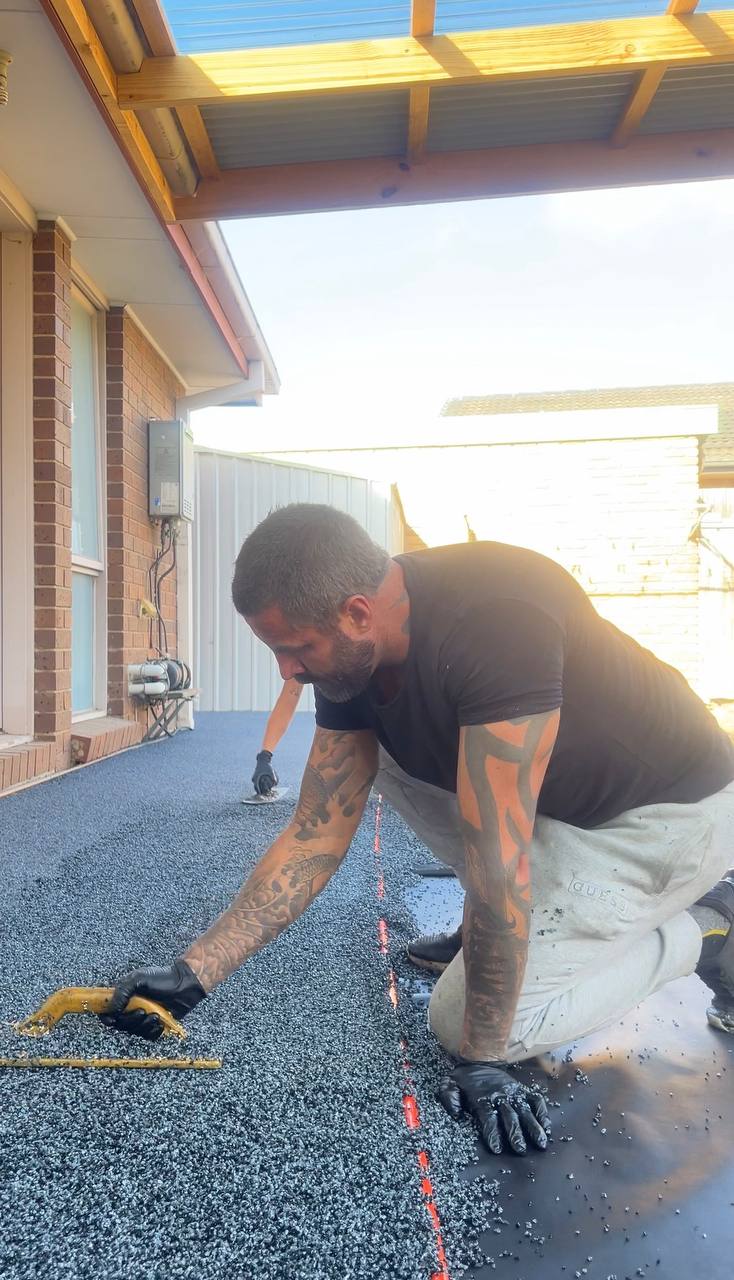
Written by Mitchell, Founder of Rubber Floor Solutions
Mitchell has 10+ years hands-on experience installing wetpour rubber flooring across Victoria. Installations for playgrounds, gyms, pools and equine facilities, with playground depth matched to fall height. Based in Melbourne, servicing all of Victoria.